The Tale of Two Pyramid Builders: Why Instant Gratification Isn't Always Progress
Sometimes, the slowest start leads to the greatest acceleration.
The Race Begins: Stone by Stone vs. Blueprint by Blueprint
Imagine this: two ambitious siblings, both tasked with constructing a magnificent pyramid. They're given the same resources, the same timeframe. The first, let’s call him Alex, is a man of action. He immediately hires laborers, starts hauling stones, and within days, there's visible progress. He's got half a pyramid taking shape, and it looks good. He’s busy, efficient, and clearly getting things done.
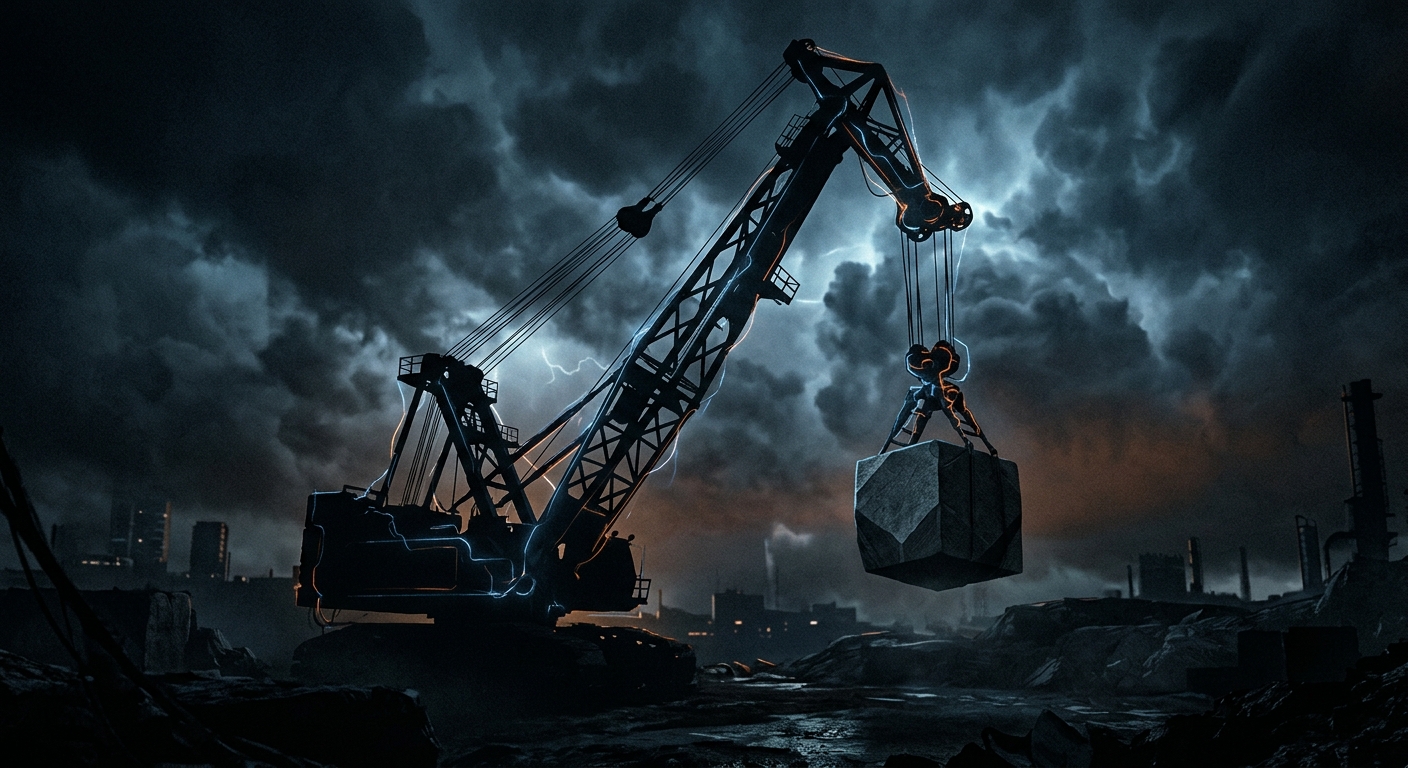
Meanwhile, the second brother, Ben, is doing something entirely different. He's not moving stones. He's not overseeing laborers. In fact, for a long time, it looks like he’s doing nothing at all related to pyramid building. He's in his workshop, tinkering, sketching, building… a crane.
The Illusion of Failure
Days turn into weeks. Alex’s pyramid grows steadily. People whisper about Ben – 'He's falling behind,' 'What's he even doing?', 'He'll never finish in time.' The optics are terrible for Ben. He has no visible pyramid, just a strange contraption taking shape, an investment of time and resources that yields no immediate outcome.
From the outside, Alex is winning. His progress is tangible, measurable, and highly gratifying. Ben’s efforts, however, look like a colossal waste of time. He's diverting resources away from the 'real' work, investing in something that isn't directly the pyramid itself. This is the critical juncture, the moment many businesses, many leaders, many individuals, would panic.
The Unveiling: When the Crane Lifts
Then, the moment arrives. Ben’s crane is finished. It’s a marvel of engineering. And from that point on, everything changes. While Alex is still laboriously moving stones one by one, Ben’s crane lifts massive blocks with ease. His progress accelerates exponentially. The gap closes, then it widens in his favor.
He doesn't just catch up; he overtakes Alex, completing his pyramid with a level of precision and speed Alex could only dream of. But more importantly, Ben didn't just build a pyramid; he built the machine that builds pyramids. He now owns the mechanism, the system, the leverage for future projects.
Understanding the Lever
This isn't just a quaint story about ancient Egypt; it's a fundamental principle for any business. The first brother optimized for activity, for visible progress, for the immediate outcome. The second brother optimized for leverage, for the underlying system, for repeatability. Most businesses are doing what Alex did. They're busy, they’re 'doing the work,' they're focused on output. But how many are taking the time to build their crane?
If you only build outcomes, you start from zero every time. You might finish this project, but the next one requires the same raw effort. Building the crane, however, means future projects are not just easier, but fundamentally different. It means scaling without linearly scaling effort. It means sustained, accelerating growth.
Book a Discovery Call if you'd like help with building strategic leverage in your business.