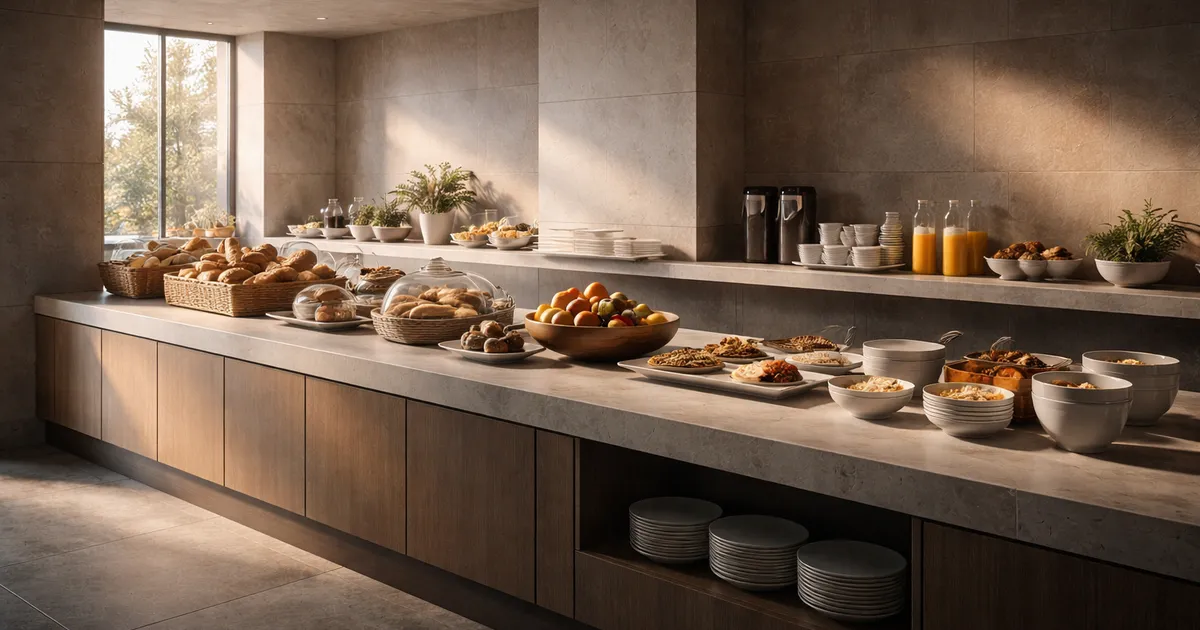
More Discipline, Less Friction, and the Wonderful Hotel Breakfast
You Don’t Need More Discipline. You Need Less Friction.
Most people eat breakfast in a hotel.
At home, the same people swear they “don’t really do breakfast.”
This isn’t a willpower issue. It’s a friction problem.
And most businesses are quietly built the same way.
At home, breakfast has friction:
- deciding what to eat
- checking what’s in the fridge
- preparing it
- cleaning up
- fitting it into a rushed morning
Each step is small. Together, they’re enough to stop the habit entirely.
In a hotel, all that friction has been engineered away.
You don’t decide to eat breakfast. You just arrive.
When something doesn’t happen in a business, the diagnosis is almost always human:
- “People aren’t following the process”
- “They’re not engaged”
- “They lack ownership”
- “They need training”
But look closer and you’ll usually find friction:
- processes live in five places
- rules are implied, not stated
- approvals require chasing
- the “right way” isn’t the easy way
- doing nothing is safer than doing something wrong
Under those conditions, avoidance isn’t laziness. It’s a rational response.
Discipline means asking people to push uphill every day.
Design means the hill isn’t there in the first place.
Hotel breakfast doesn’t rely on self-control. It relies on:
- obvious pathways
- low-effort entry
- no penalty for participation
- no thinking required
That’s why it works—even for people who “never eat breakfast.”
Most internal systems are built like home kitchens:
- everything technically exists
- nothing is in the right place
- using it requires thought
- skipping it has no immediate cost
So people skip them.
Not because they don’t care. Because friction always wins when time and pressure are involved.
The moment something requires explanation, memory, or bravery—it’s already fragile.
If I disappear for two weeks, what stops happening?
Whatever the answer is—that’s where friction lives.
If a behaviour needs reminders, supervision, escalation, personality, or “someone who knows how it works,” it isn’t a process. It’s a dependency.
You don’t need more meetings. Stricter policies. Better motivation. Tougher accountability.
You need fewer steps. Clearer paths. Safer defaults. Lower effort.
Because people don’t resist good systems. They resist friction.
And the best businesses—quietly, deliberately—remove it.